Sticky: Accessibility in Stationery
Problem
We know how hard it is to use a planner and stick with it. Organizing your life together can feel near impossible, especially for those with neurodivergence like ADHD. Planners are often made with neurotypical approaches to design, leading to guilt, overwhelm, and frustration.
User Persona
Print Production
Bookbinding
Branding
Solution
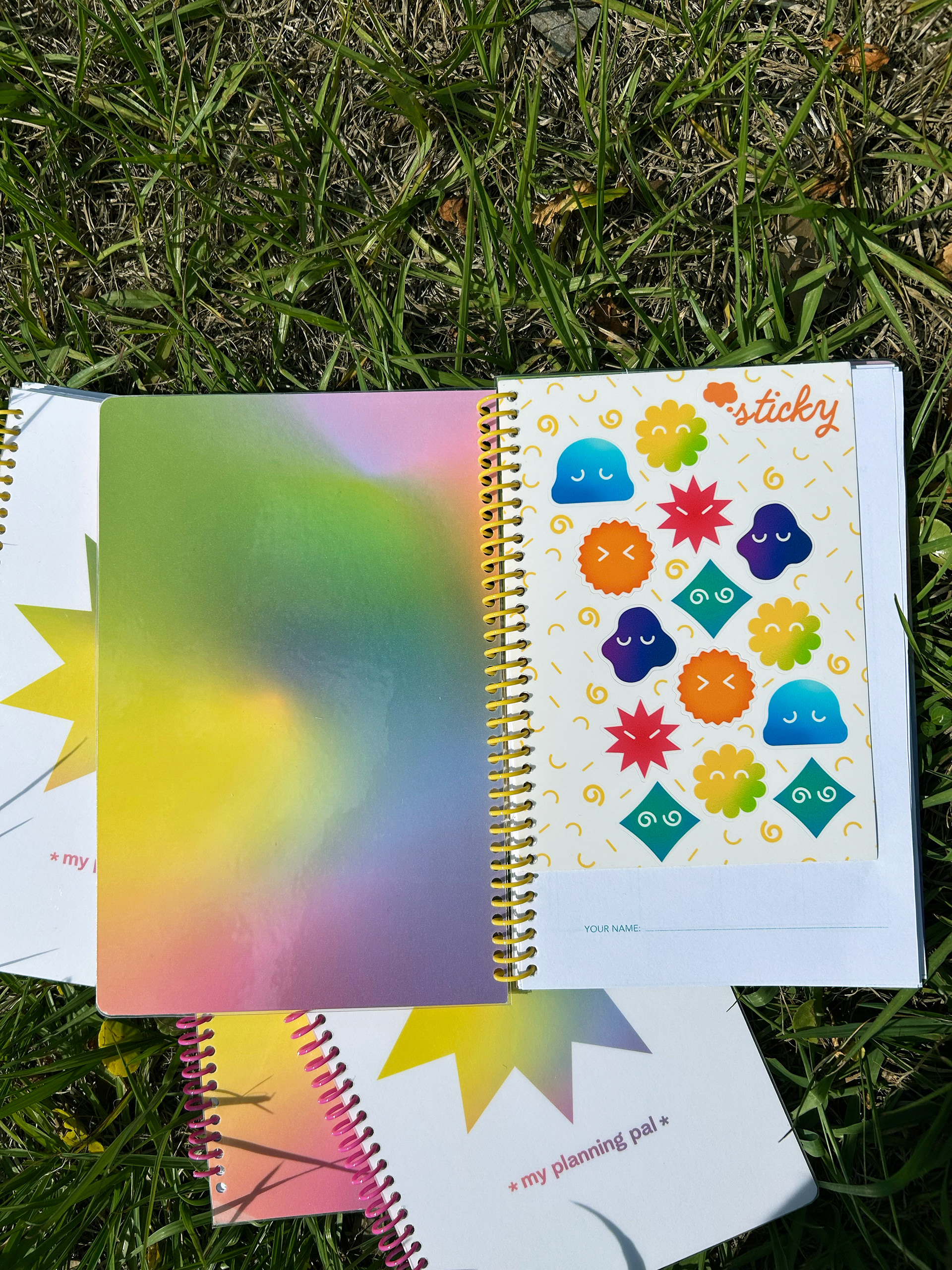
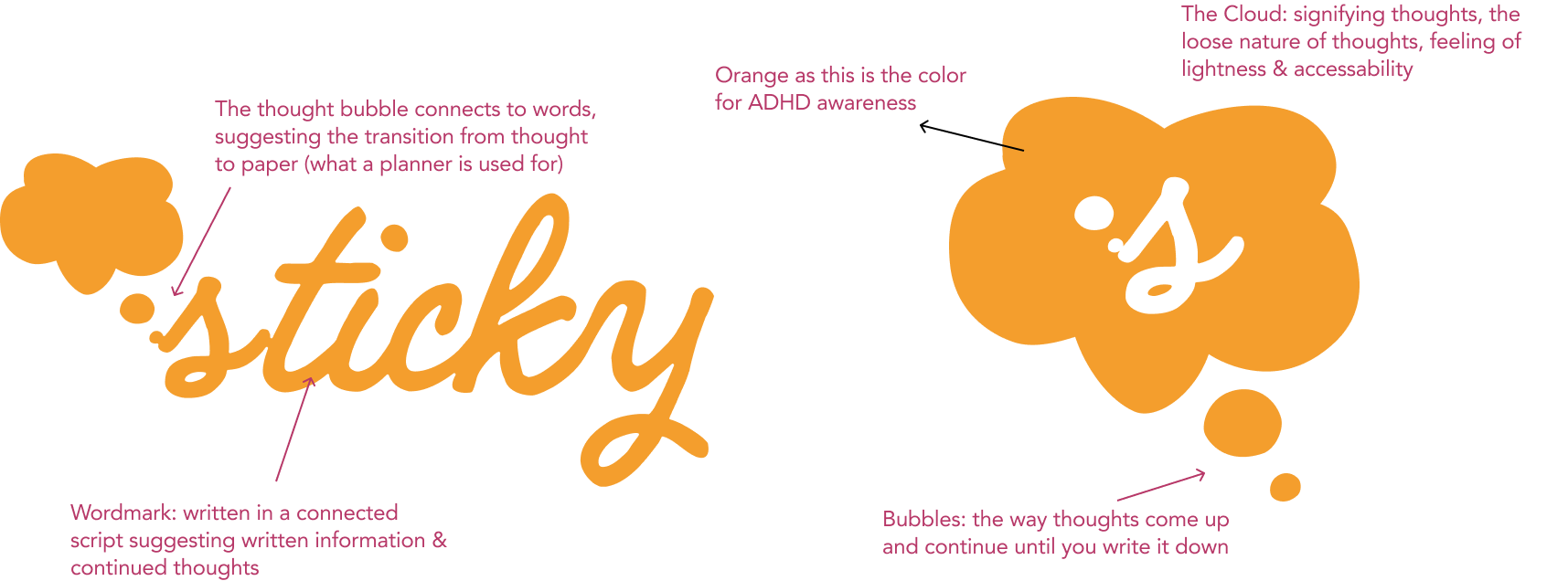
Sticky is here to help you out. We provide curated planners and stationery through an ADHD and neurodivergence-informed lens. Prioritizing vibrant covers and sticker sheets as well as clearly organized, commitment-free layouts keeps users coming back to something that’s easy to forget.
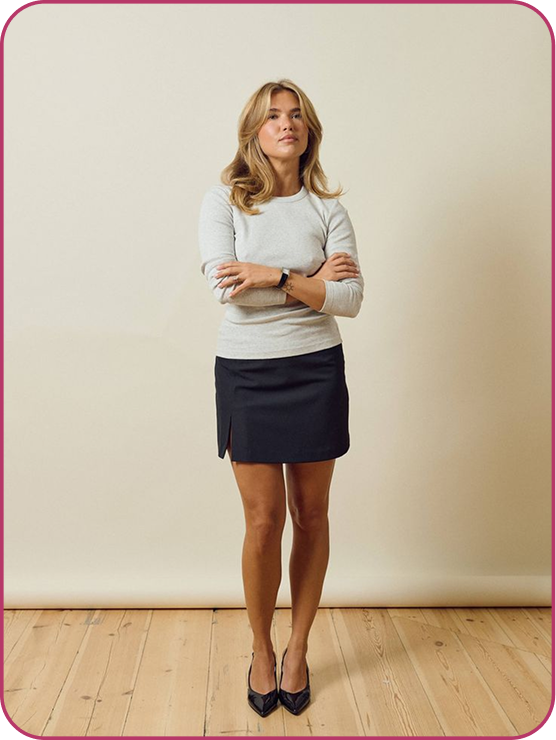
Evelyn is a 20 year old marketing assistant who lives in Downtown Orlando with a roommate, has a busy schedule, and recently found out she has ADHD and is neurodivergent. While in therapy, she was suggested to find ways to expend her energy while multi-tasking to improve productivity and focus.
Evelyn values:
• self-respect
• hard work
• growth
• quality
Evelyn values:
• self-respect
• hard work
• growth
• quality
Age Range: 18-25
Economic status: middle/upper class
Life Stage: early adulthood, recently graduated high school or college
Race: any
Gender: mostly female
Economic status: middle/upper class
Life Stage: early adulthood, recently graduated high school or college
Race: any
Gender: mostly female
Research
To better understand how people's relationships to their planners, I conducted a survey of over 20 responses of people in my target age range.
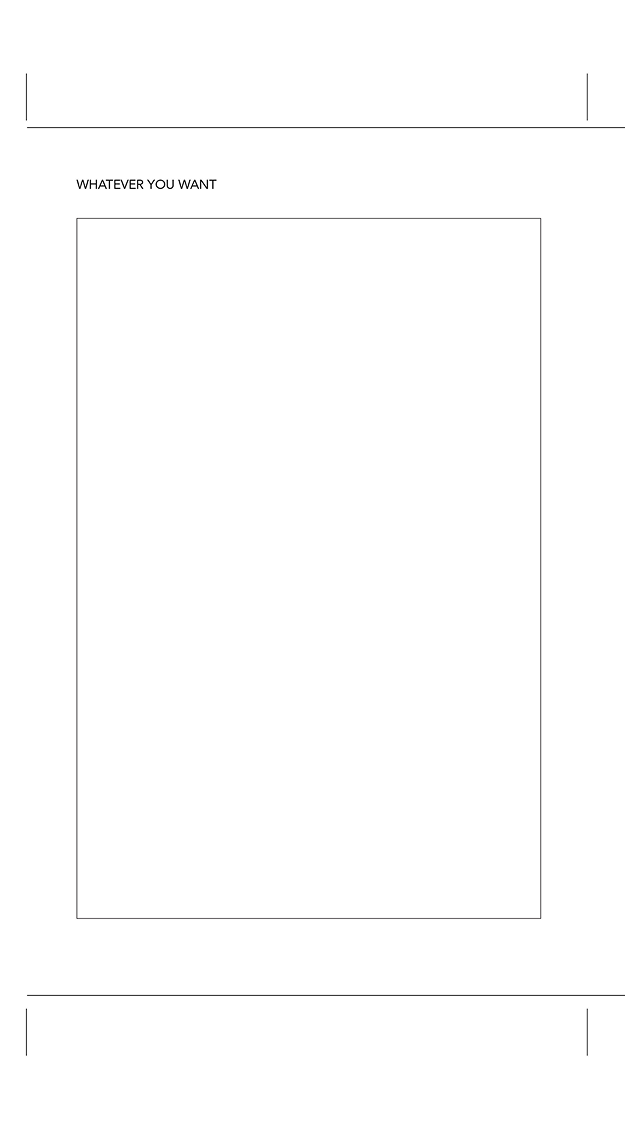
"I wish planners had just more pages in the front/back that are purely lined or let you write whatever. I always run out of those pages in the planners I have had because they only have, like, 10 of those."
— Survey response
I wish my planner had more:
"Sketching room" "Encouragement, stickers, premade petty lists" “Brain dumps/ideas/random jotting pages” "Customizability"
"Something that kept me coming back"
— Survey responses
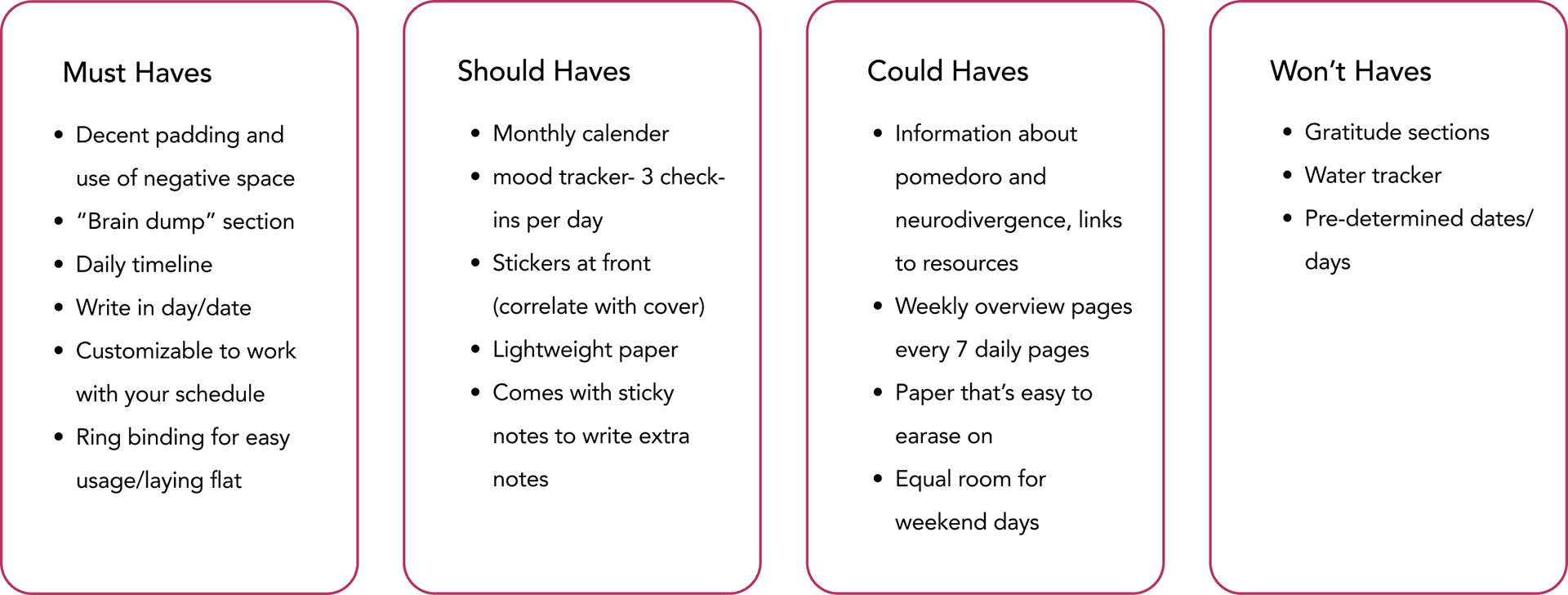
Through both my survey and testing out early designs of planner sheets on people who fit the criteria of my target audience, I was able to conclude what my planner should and should not have:
Research
To better understand how people's relationships to their planners, I conducted a survey of over 20 responses.
"I have a hard time knowing how to block my time."
— Survey response
Over 80% of survey responses reflected frustrations with lack of accessibility.
The Product: my planning pal
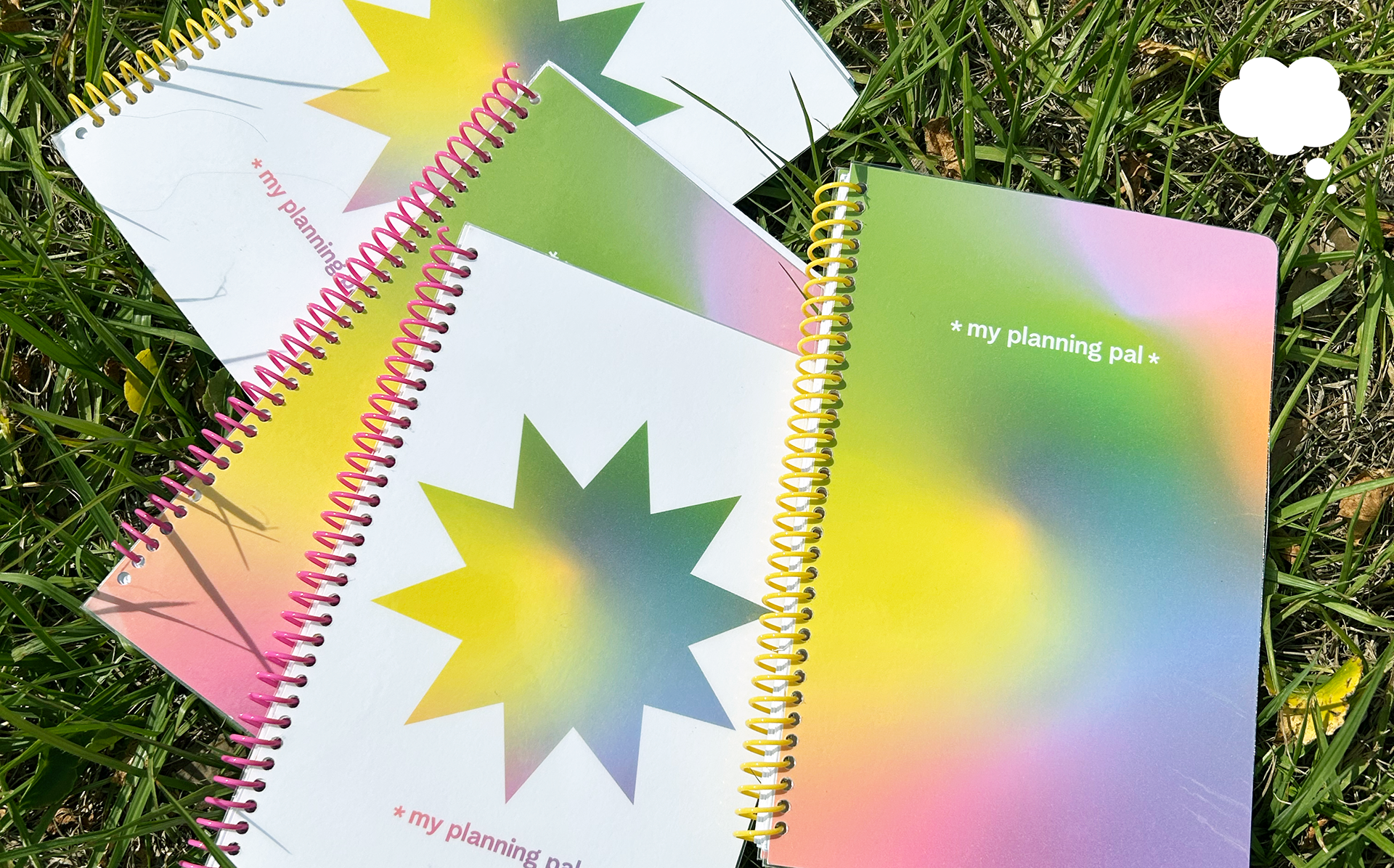
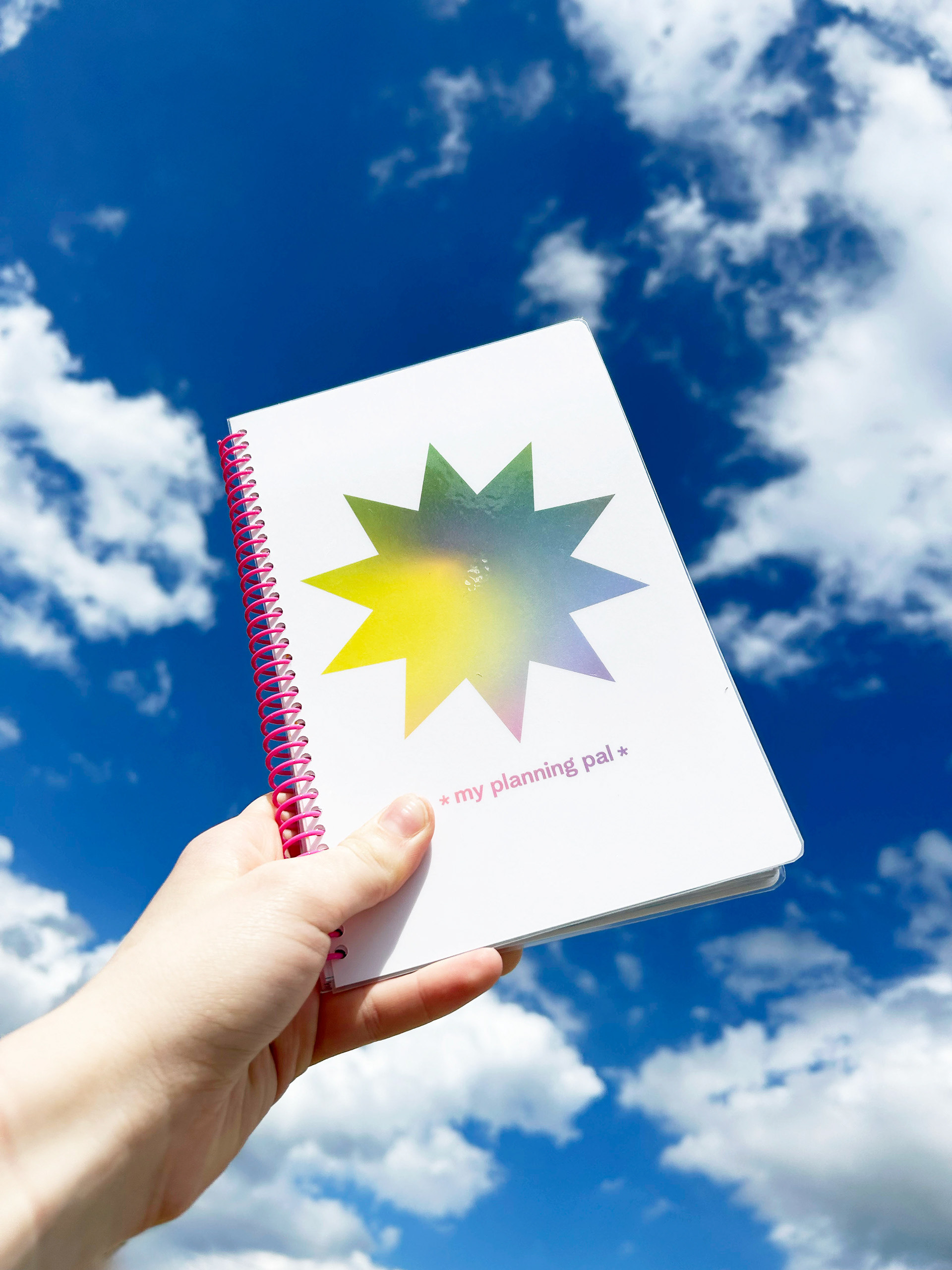
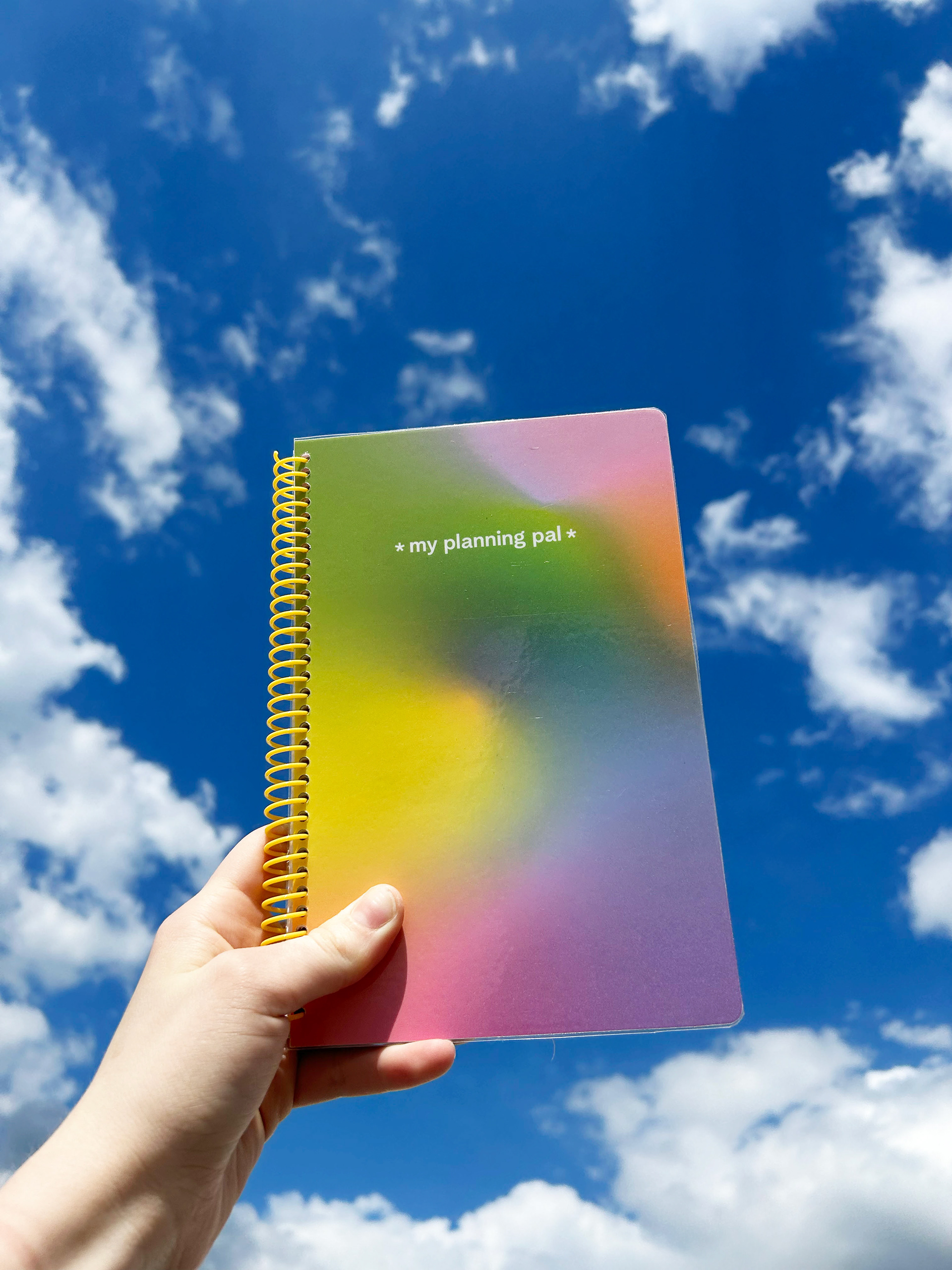
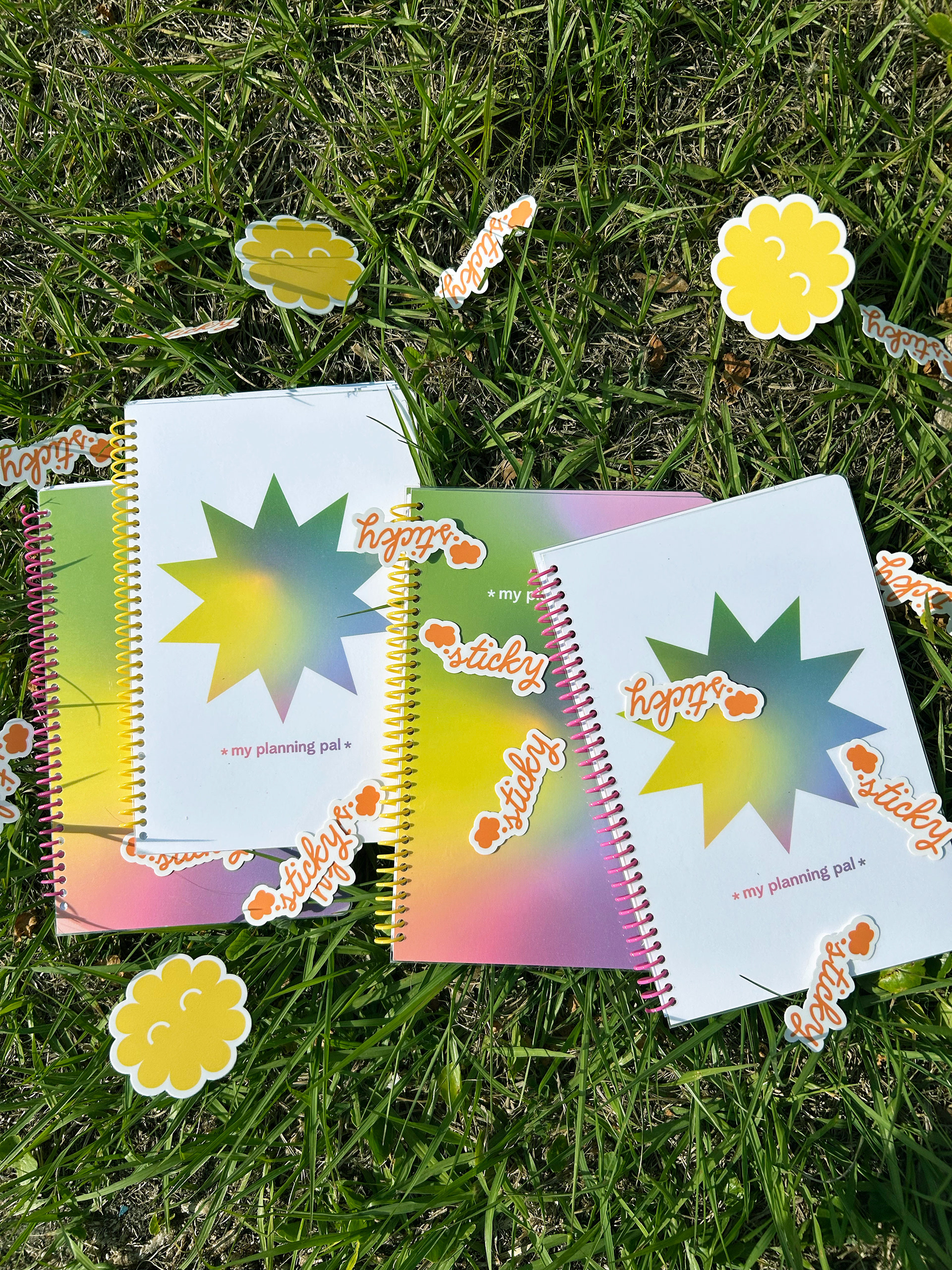
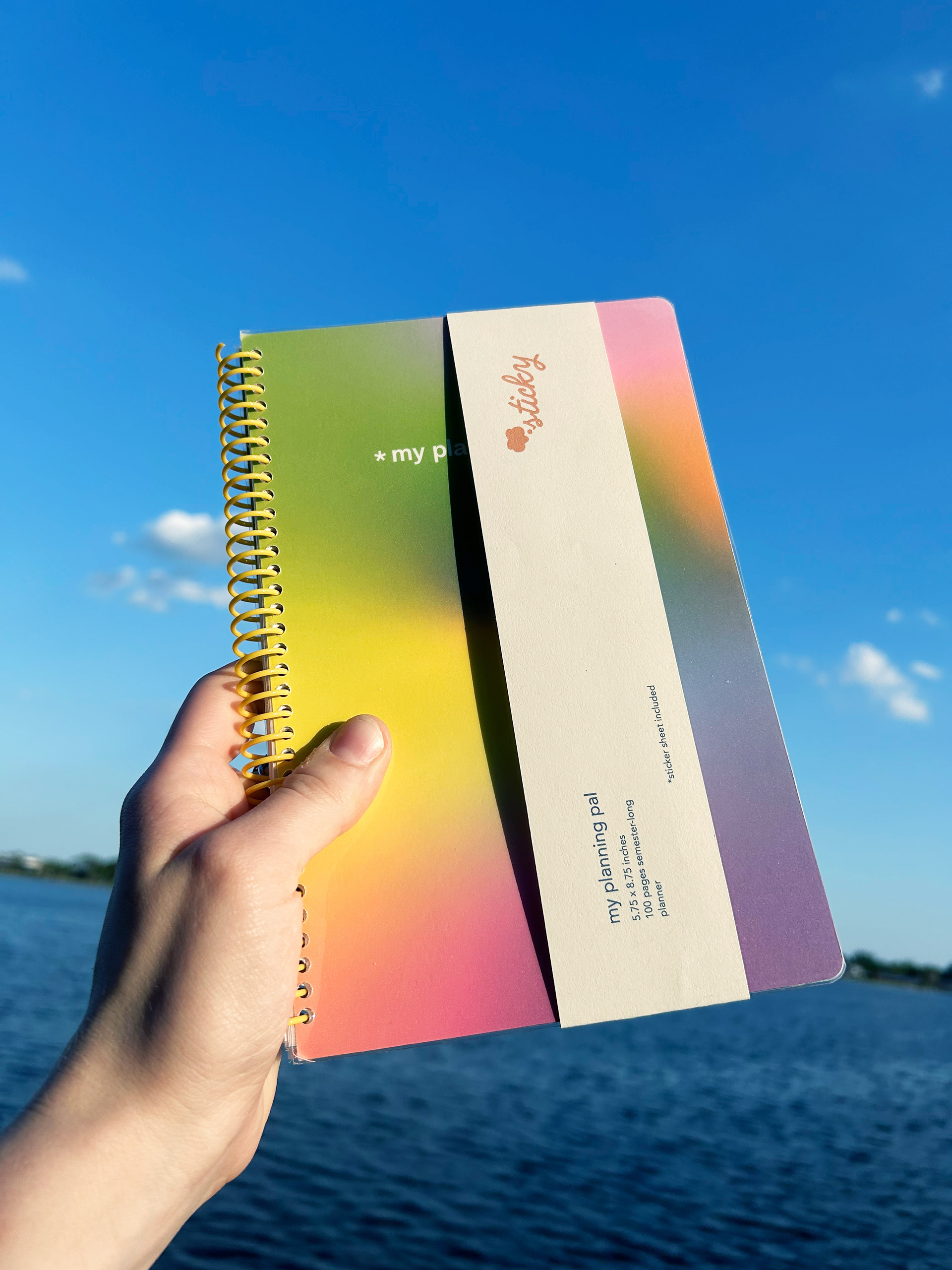
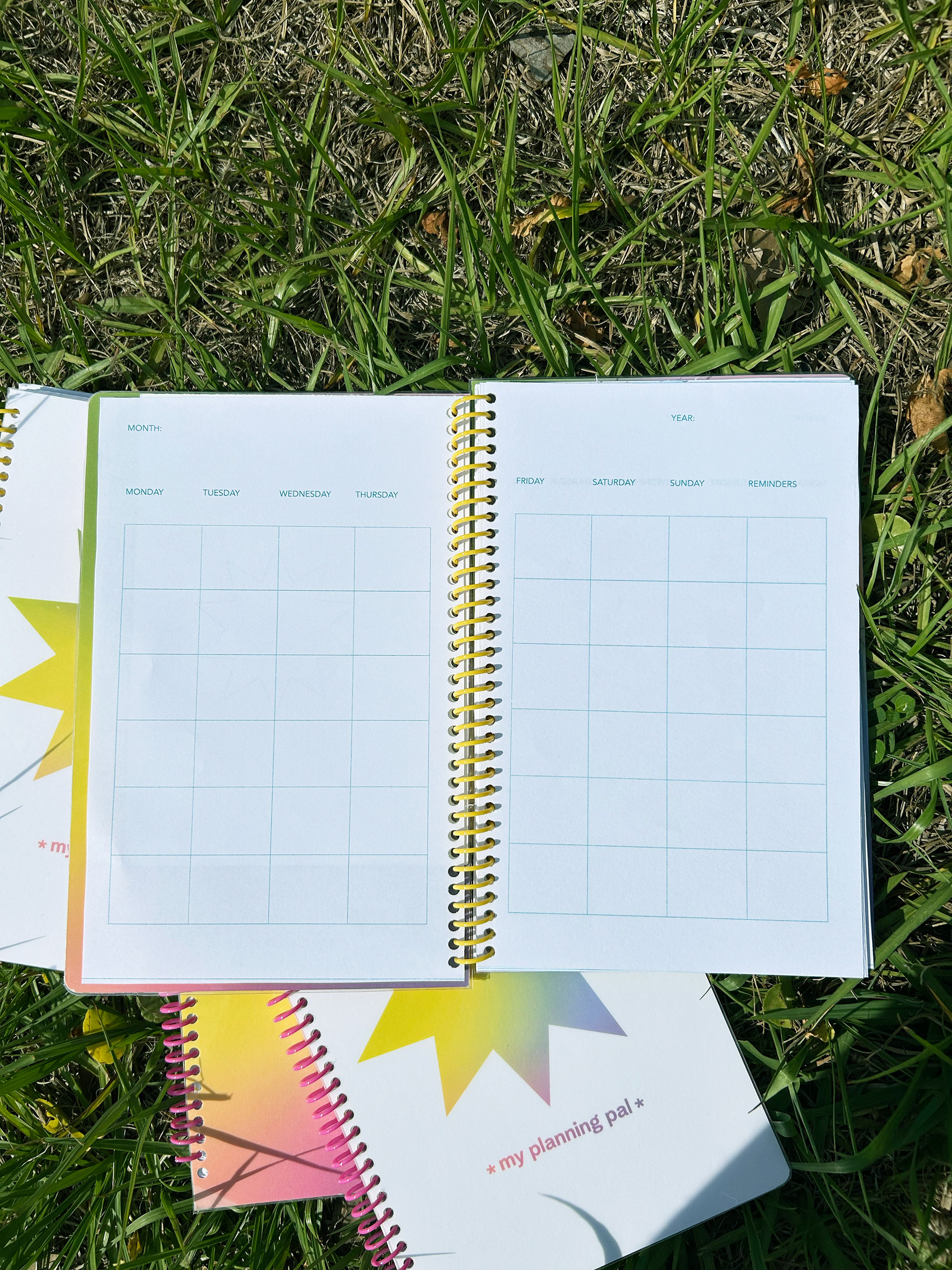
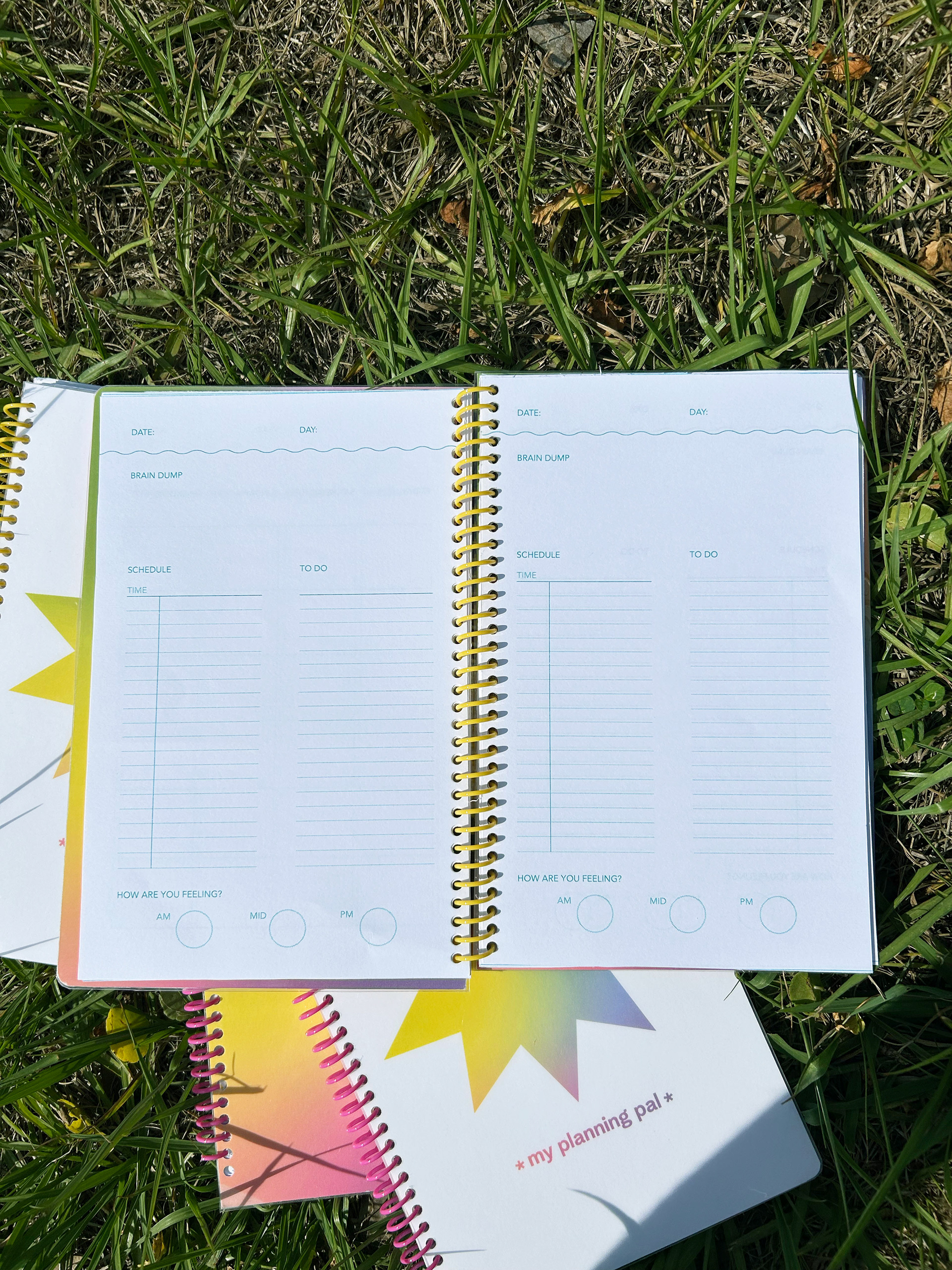
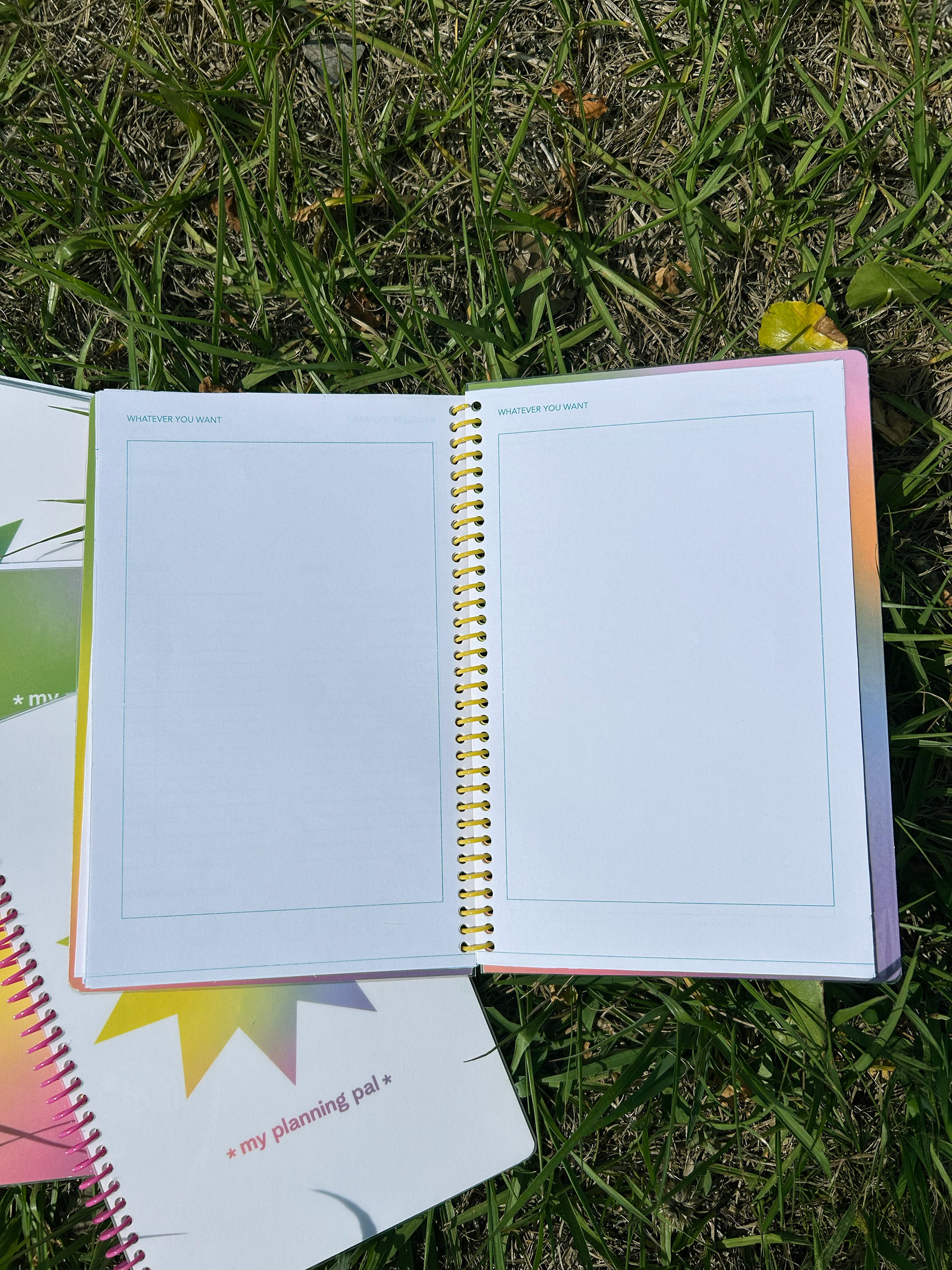
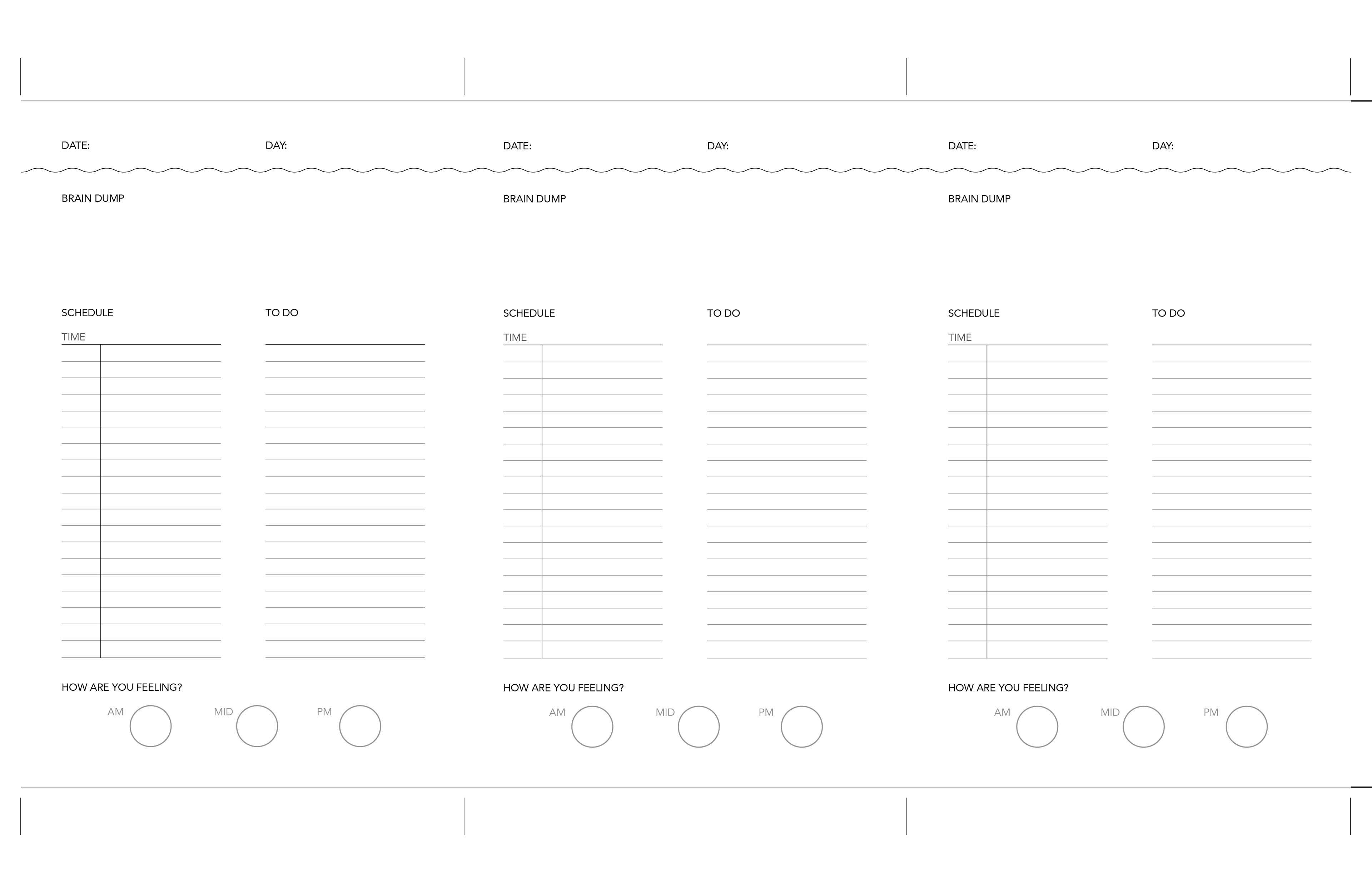
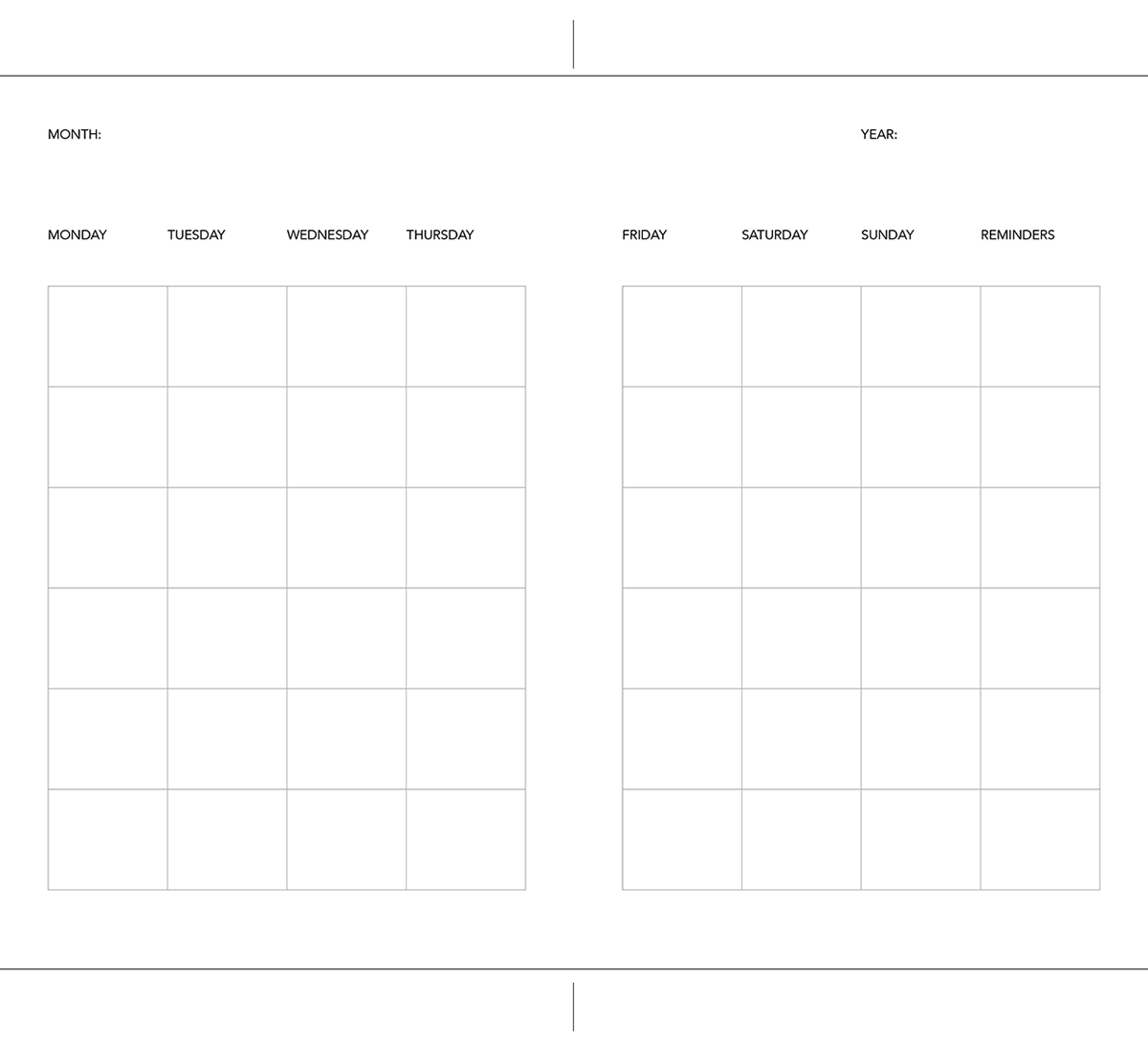
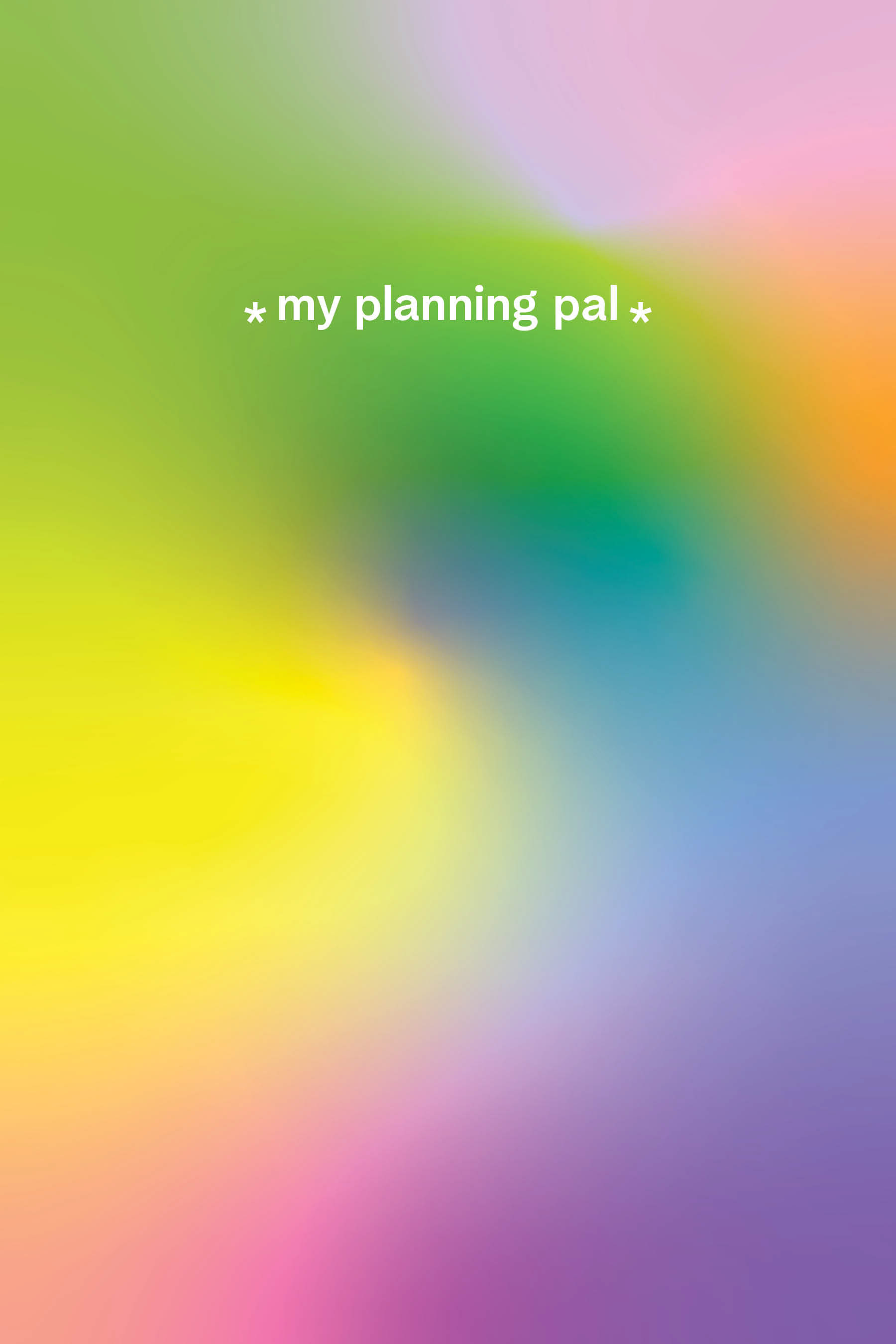
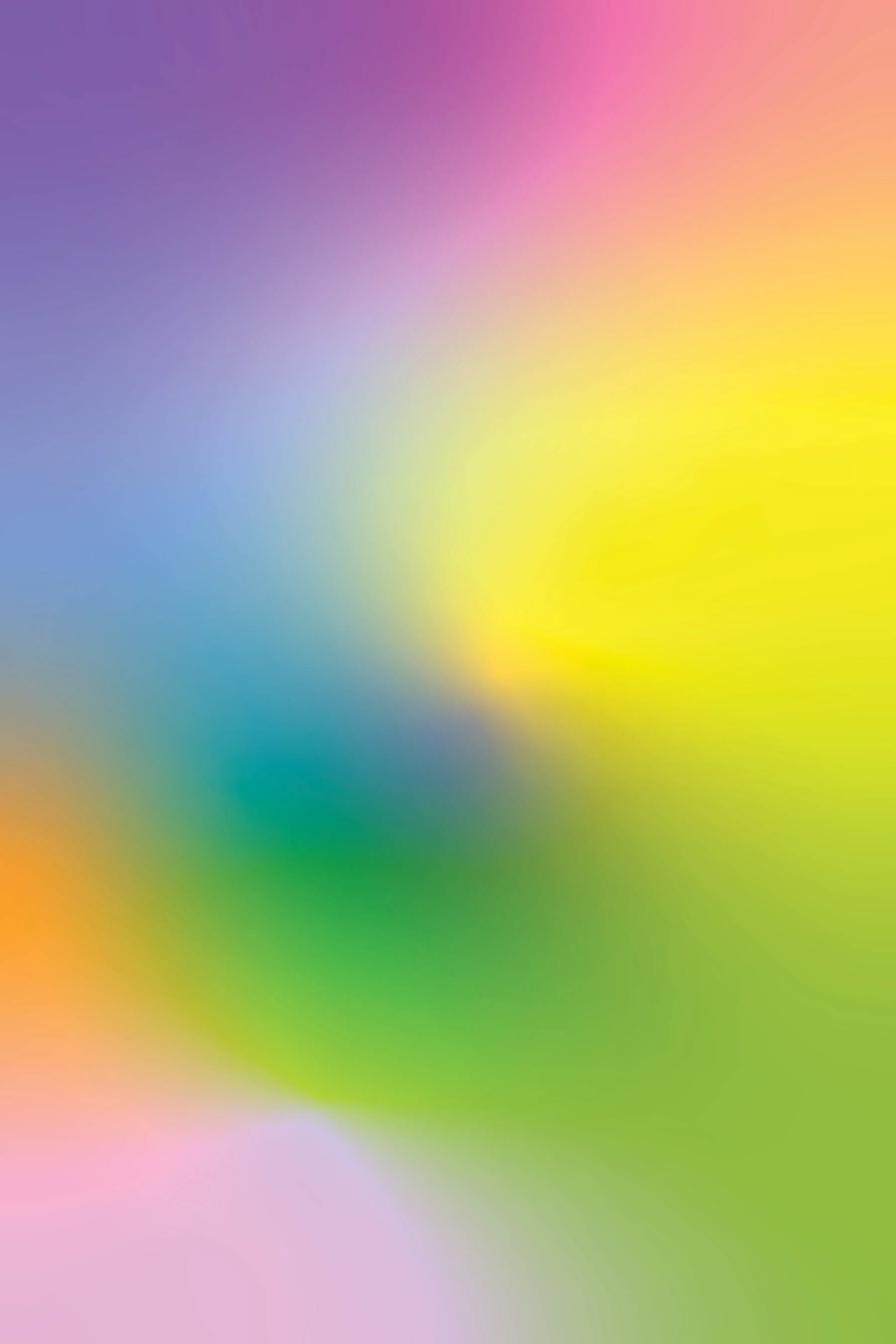
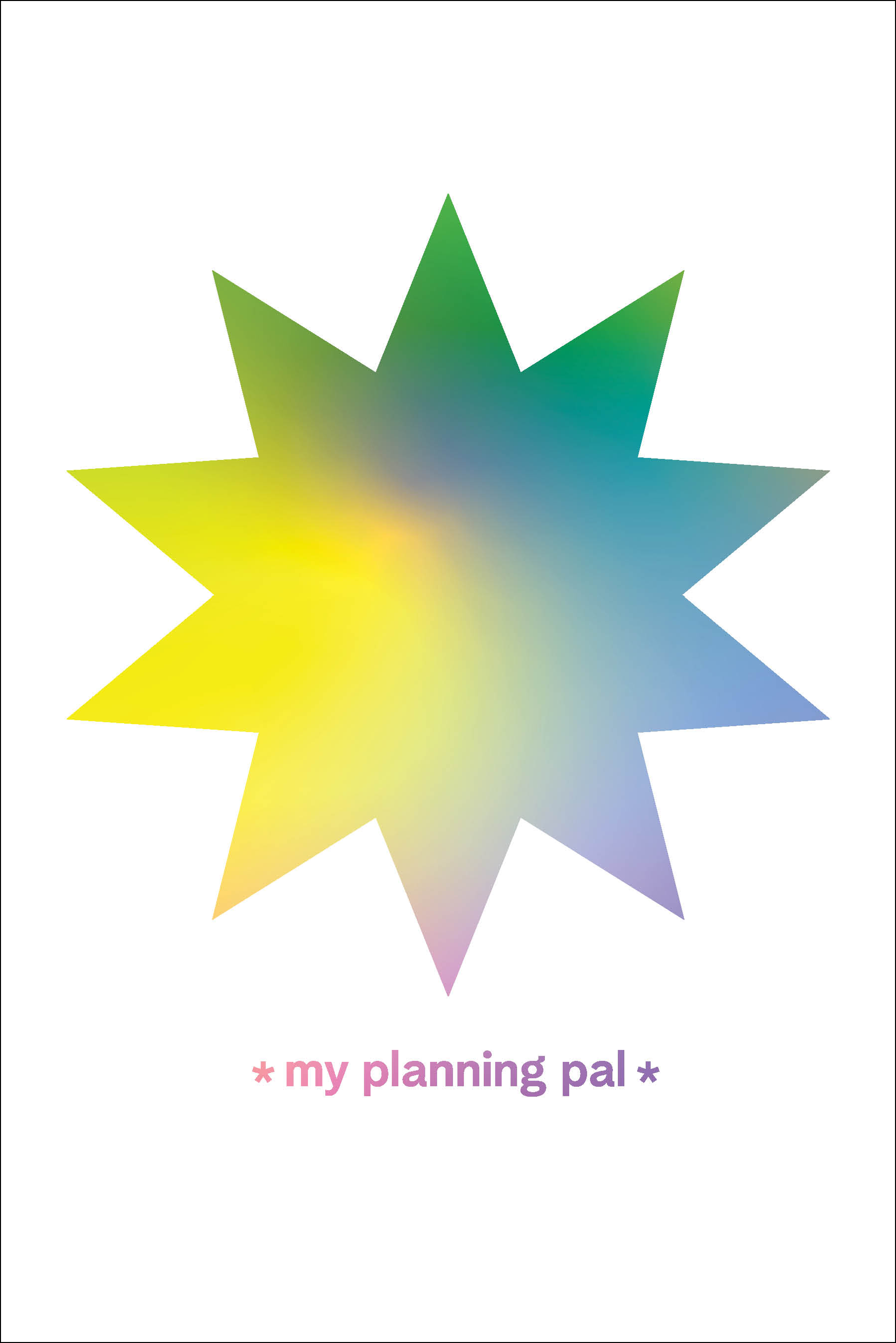
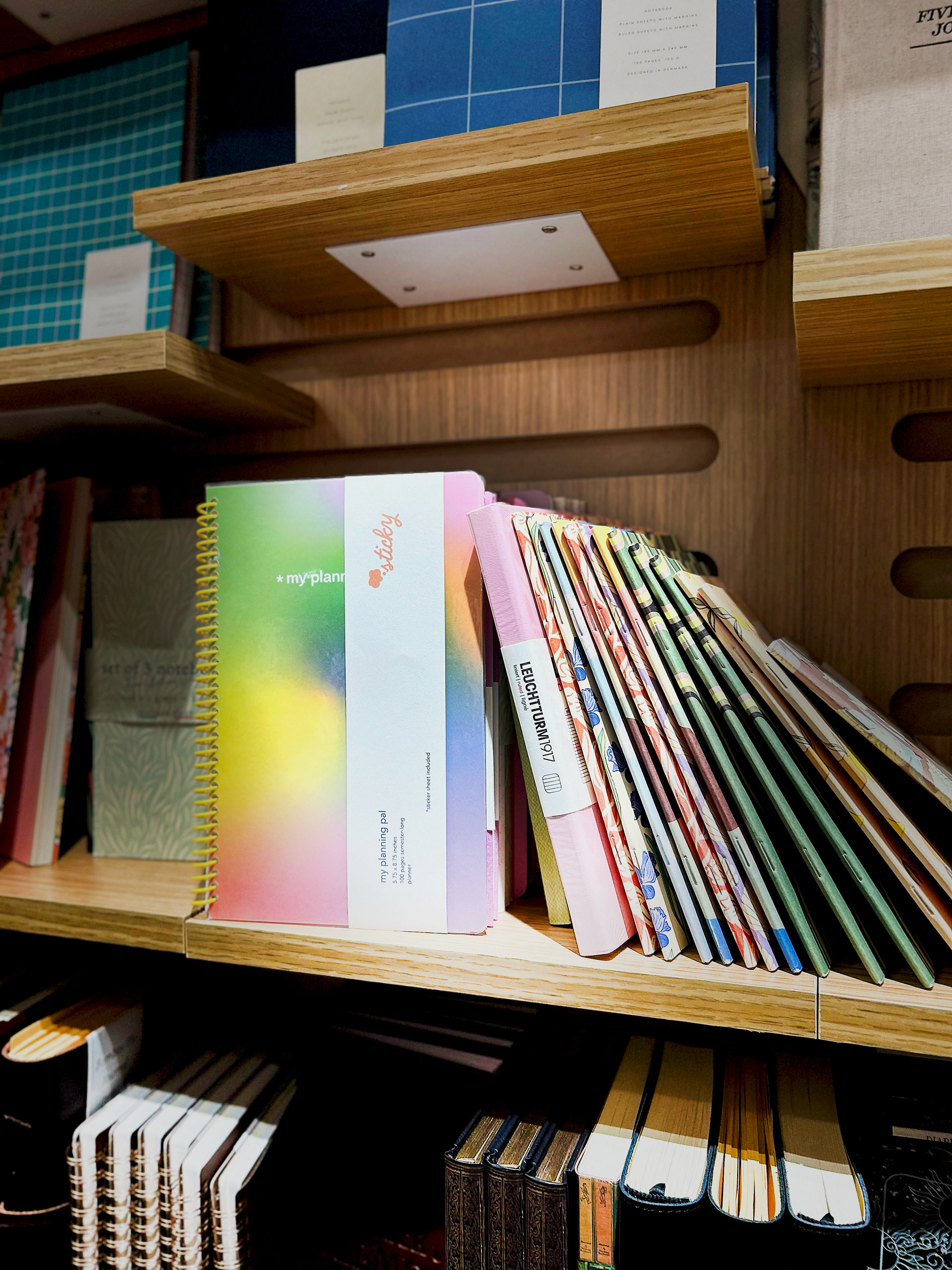
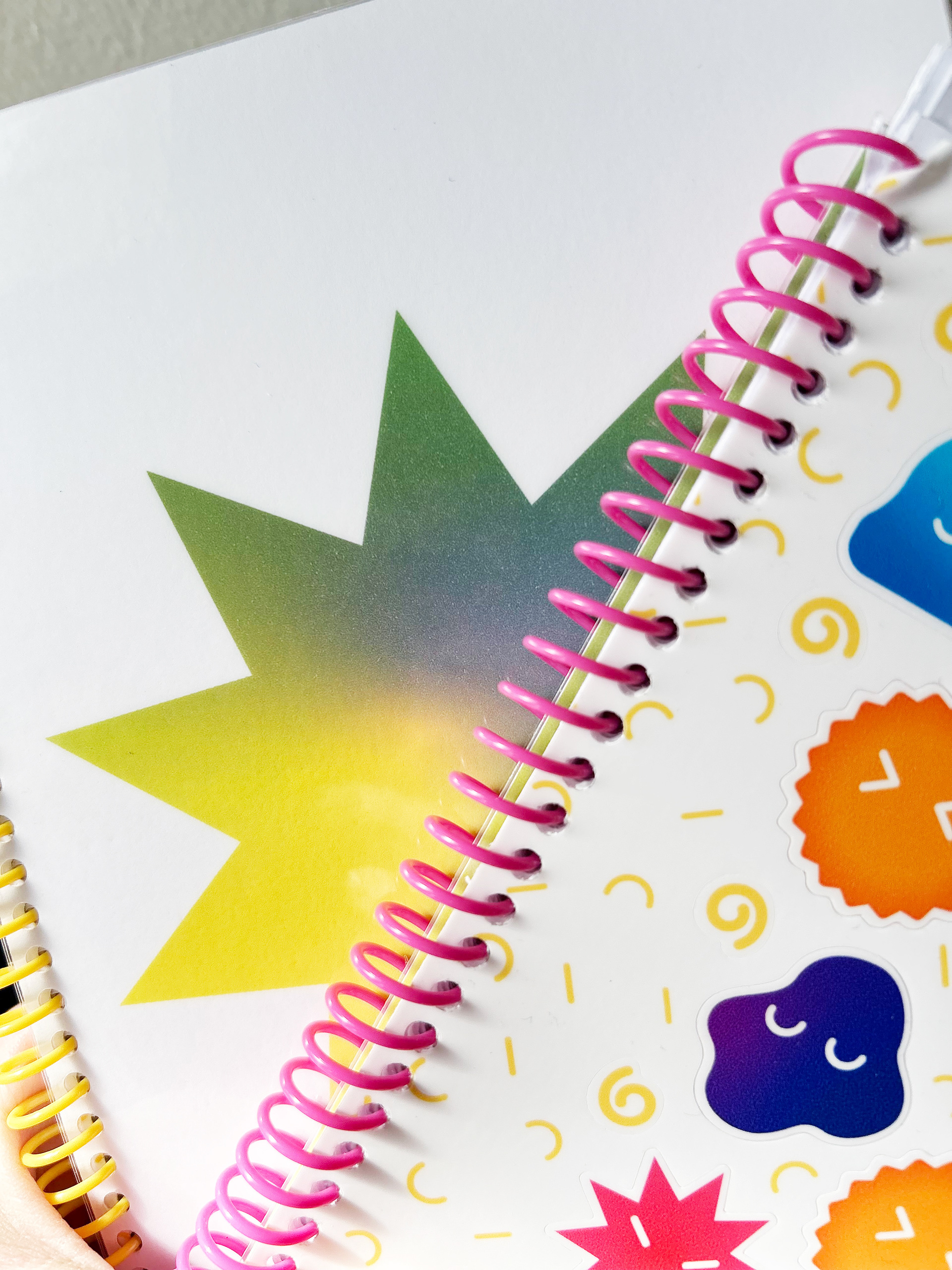
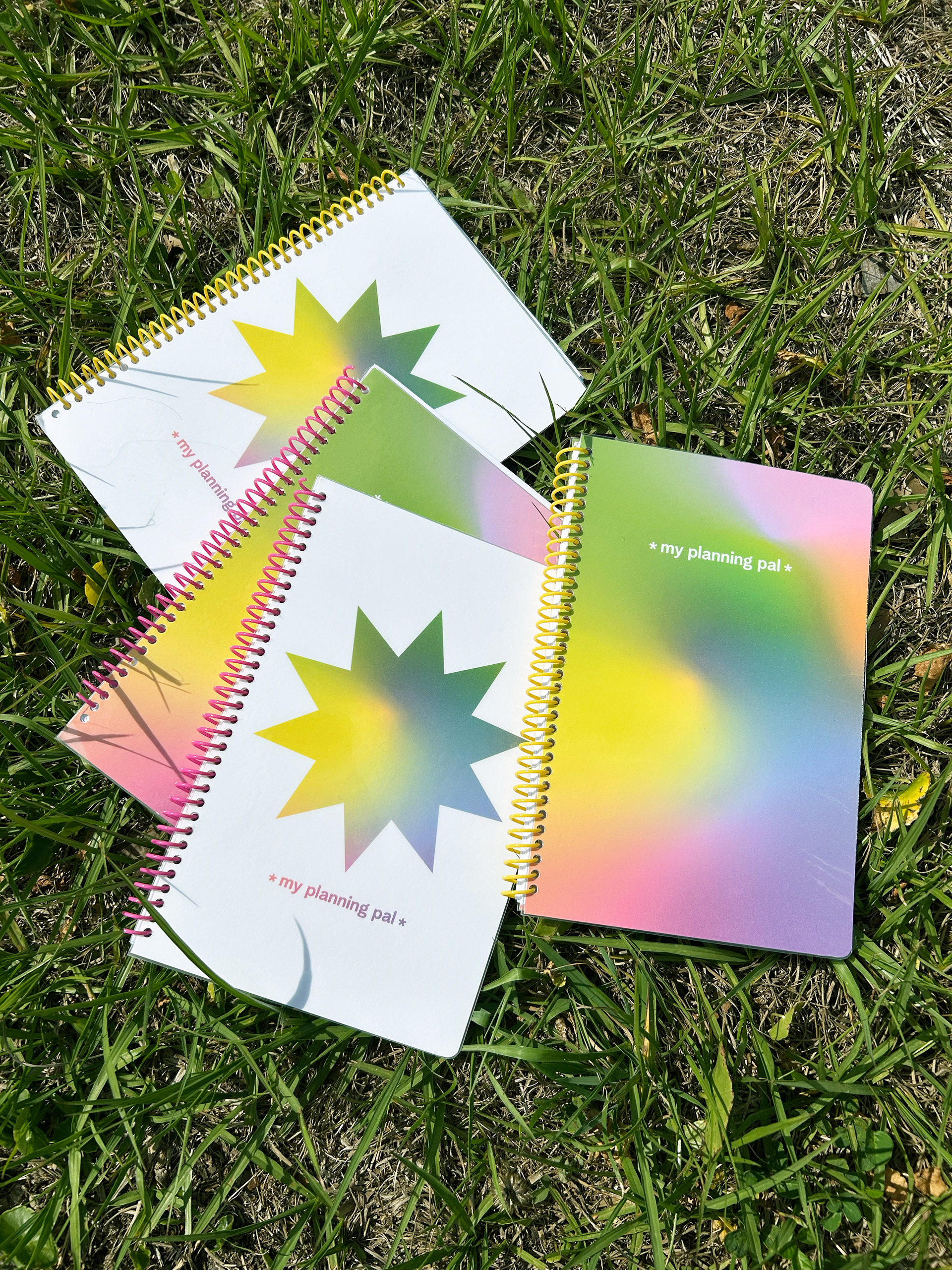
Featuring undated daily and monthly pages as well as extra whatever-you-want pages, "my planning pal" combines flexibility with structure to propose an approachable way to organize. The planner uses premium matte Riso-printed paper for the inside copy for personalized touch as well as print efficiency. The covers are made with laminated 80 lb cardstock to ensure protection against the elements. The planners are bound with hard plastic colored spiral ring binders to hold it all together, ensuring the ability to flip the planner around in multiple ways for accessibility.

Marketing
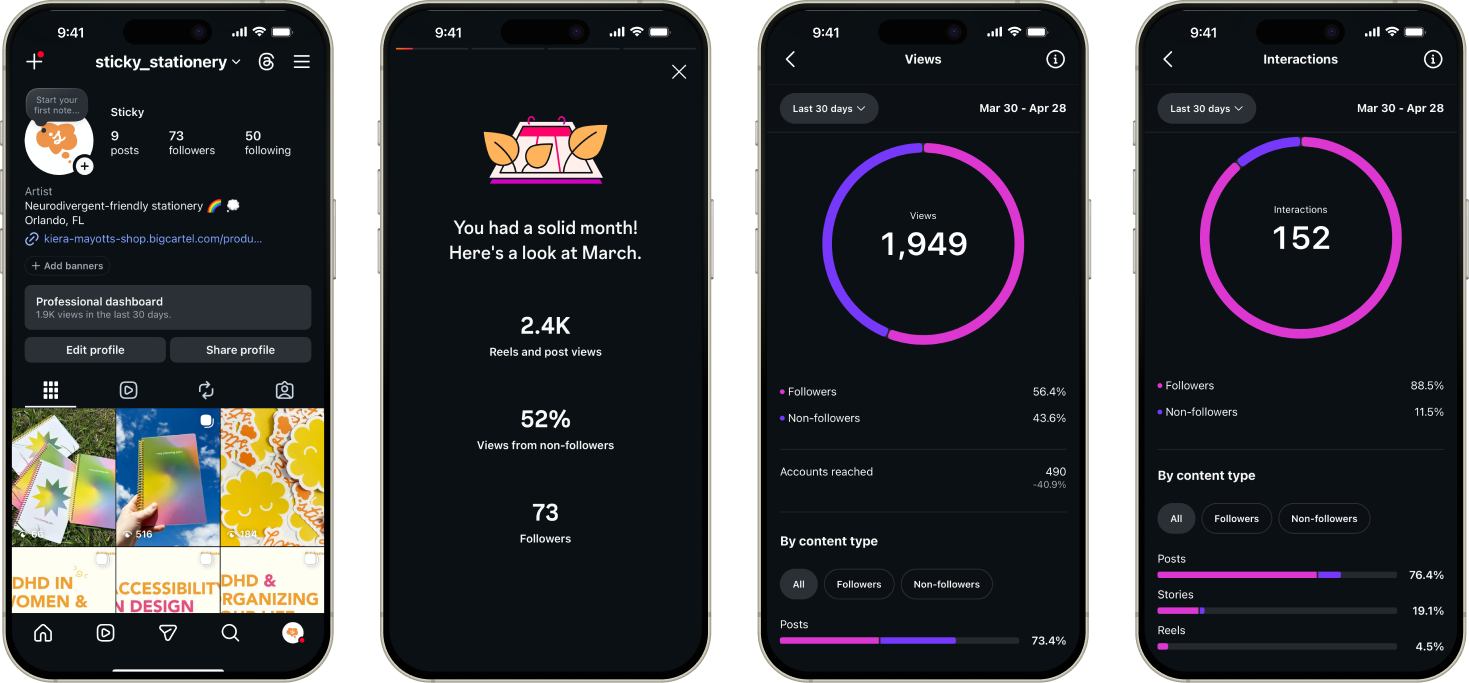
To market my planning pal and the Sticky brand, I primarily utilized Instagram as a way to share content about information pertaining to brand values and the process/updates on making the planner. From start to launch, @sticky_stationery garnered over 2.4k views and 152 interactions. I also had stickers that were given out for free in day to day and at design convention Creative South 2026 with the instagram handle on the back to gather more audience.
Branding
hcjdh







Takeaways
This project shows how to make a tangible impact with analog design and branding. Accessibility in design can exist simultaneously with strong brand guidelines- to create something approachable does not have to mean a sacrificing curation. Successful print design means copious research, prioritizing the user, and attention to purpose.